
Care for recession.
Confidence in your smile.
Sensitive roots or a changing gumline can make eating, brushing or smiling uncomfortable. Gum grafting may help selected areas by adding tissue or covering exposed roots. Your evaluation starts with what bothers you.
What is gum grafting intended to do?
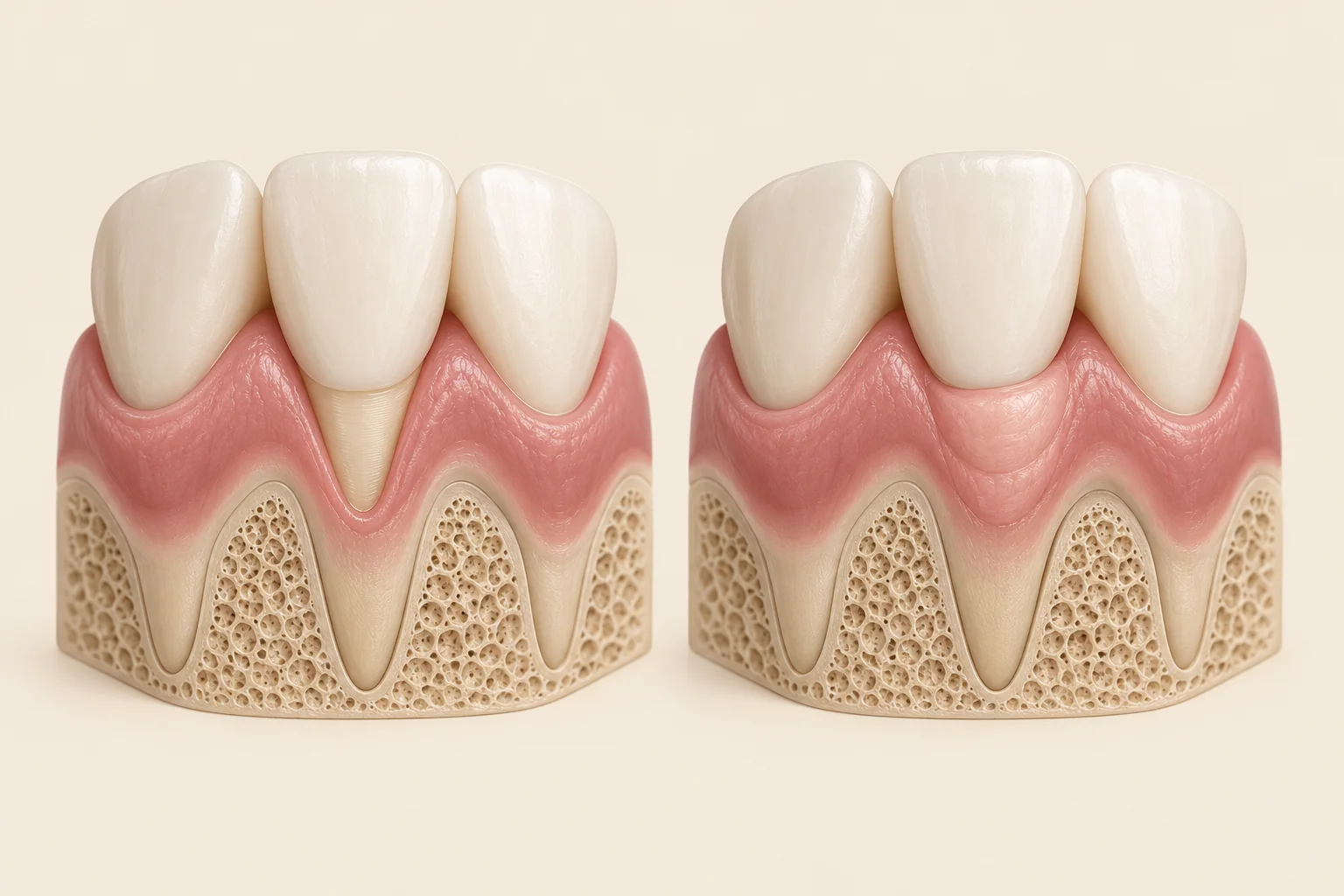
When the gumline recedes, part of a tooth root can become exposed. Gum grafting may be recommended to add tissue or cover a root, depending on the site. The examination considers the recession, tissue thickness, sensitivity and cleaning habits.
Where does the tissue come from?
Grafting can involve tissue from another area of the mouth or a donor source. The technique and material depend on the purpose of the procedure. Ask Dr. Dreyer which source is proposed and whether another area of your mouth would also need to heal.
Plan for healing and follow-up.
Recovery depends on the area treated and the technique. Before treatment, ask about eating, cleaning, activity, discomfort and when the team will review healing. Your postoperative instructions should be specific to your procedure.
Specialist experience, connected to your care.
Dr. Andrew Dreyer is a Diplomate of the American Board of Periodontology. His training at Wilford Hall Medical Center and UT Health San Antonio, seven years of Air Force service and focus on gums, bone and implants inform the care he provides in Bakersfield.
Understand periodontal specialty careYour questions, answered.
Does every receding gum need surgery?
No. Recession needs an assessment of its cause, severity and effect on the tooth. Your doctor can explain whether monitoring, changes in home care or a graft should be considered.
Will the entire root be covered?
Coverage depends on the starting anatomy and the treatment chosen. Discuss the realistic goal for each area rather than assuming every exposed root can be completely covered.